
Smart security cameras use high-definition video and real-time intelligence to provide better, quicker surveillance. These technologies do more than just record; they interpret. Smart cameras that have built-in AI detection recognize certain events such as human movement, vehicle activity, or package delivery and notify users immediately. Compared to typical cameras, they eliminate false alarms and provide more information for each warning. Homeowners and businesses rely on these systems to provide accurate, proactive monitoring. This tutorial explains how smart cameras function, what AI detection actually means, and which aspects are most important. Understanding these systems allows you to select a configuration that optimizes security while not overloading you with noise.
What Are Smart Security Cameras and How Do They Work?
Core Components of Smart Security Camera Systems
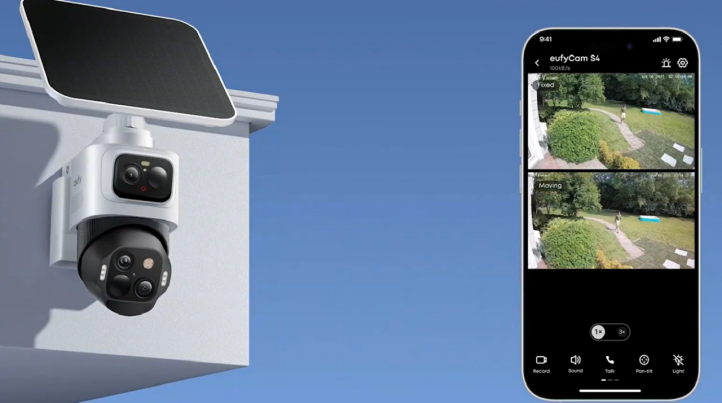
A smart security camera has more than simply a lens; it also has a camera sensor, an inbuilt CPU, motion detection software, network connectivity, and a mobile app. The CPU analyzes film in real time, allowing for features like AI-powered warnings, two-way audio, and cloud storage. Many smart cameras include Wi-Fi or 4G connection and are compatible with house assistants such as Alexa or Google Home. They frequently have infrared night vision, sirens, and a broad dynamic range for improved image balance. The accompanying app allows users to see live feeds, adjust alarms, and retrieve recorded recordings. These components work together to provide a surveillance experience that is responsive, intelligent, and simple to operate.
How AI Detection Analyzes Motion and Video
AI detection uses machine learning techniques to search video frames for specified items or movement patterns. Instead of notifying consumers whenever motion is detected, AI-powered cameras assess form, size, and behavior to differentiate between humans, animals, cars, and irrelevant movement such as blowing leaves. Some systems also identify behavioral irregularities, such as someone lingering or approaching at unusual hours. This real-time analysis is performed on-device or in the cloud. When a relevant incident is recognized, the camera sends an alert including a thumbnail or brief clip. AI detection enhances accuracy by filtering out noise and concentrating on real threats, ensuring that you only receive relevant notifications.
Difference Between Traditional and AI-Powered Cameras
Traditional security cameras passively record everything and depend primarily on manual video inspection. Motion detection is often simple, prompting warnings for any movement, such as a passing automobile or a rustling tree. This typically results in false alerts and alert fatigue. In contrast, AI-powered cameras analyze footage in real time to recognize particular things, such as people, automobiles, or pets. They can ignore background motion, detect patterns, and even learn with time. AI cameras also have more advanced functions such as facial recognition, activity zones, and behavior tracking. This enables consumers to answer more quickly and with greater context. The final result is a more efficient, accurate, and user-friendly security system that reacts to your surroundings.
What Can AI Detection Identify in Security Cameras?
People, Vehicles, and Package Detection
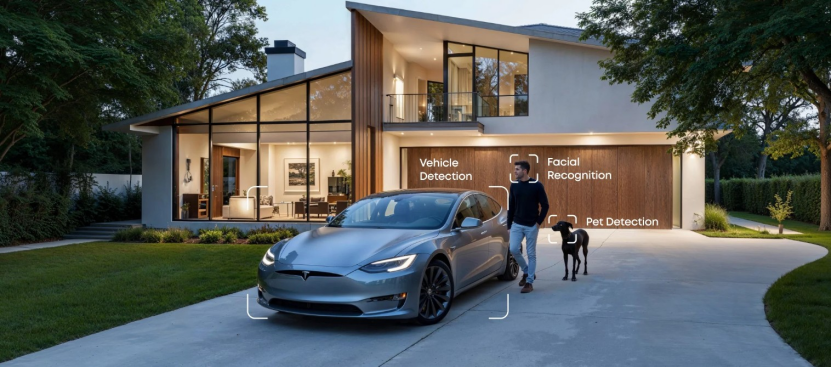
Modern smart cameras with AI detection can distinguish between people, cars, and parcels. This object-based categorization enables the camera to give notifications for only the events that are important to you. For example, you may configure the system to only alert you when someone approaches your door, disregarding passing cars or moving animals. Package detection improves convenience by notifying you when a delivery comes, even if the individual departs before you check. This is particularly useful for tracking porch deliveries and preventing package theft. These features make alerts more actionable and decrease false positives, transforming your camera into a more intelligent, dependable monitoring tool for home or business usage.
Pet Detection and False Alert Reduction
Pet detection is a useful AI tool that helps to reduce false alarms produced by cats, dogs, or animals. Cameras programmed to identify animal forms may disregard their motions while still responding to human activities. This is especially beneficial in houses with pets or in outdoor places where animals wander freely. By eliminating pet-triggered messages, AI keeps your alert stream clean and focused on actual risks. Some systems allow users to adjust sensitivity or choose “person-only” detection modes. This not only lowers distraction but also saves battery life and storage space by capturing just the most critical occurrences. Smart filtering improves the efficiency of your security system, particularly in crowded situations with frequent motion.
Facial Recognition and Custom Detection Zones
Facial recognition enhances intelligence by identifying specific persons based on previously recorded profiles. Once trained, the camera can alert you when recognized people come and flag unfamiliar visitors. This is perfect for monitoring family members, caretakers, and repeat visitors. It also helps to discern between ordinary activity and prospective hazards. Additionally, custom detection zones enable users to create focus regions inside the camera’s field of vision. You can watch a driveway while disregarding a sidewalk, or concentrate on a door while ignoring passing street traffic. Together, facial recognition and zone control provide pinpoint precision in warnings, decrease noise, and improve real-time monitoring and replay evaluation.
Conclusion
Smart security cameras with AI detection offer more than just recording—they interpret what they see to give you meaningful alerts. These systems utilize cognitive filtering to keep your notifications relevant, identifying people, automobiles, and parcels while also eliminating false alarms produced by dogs or wind. Facial recognition, motion zones, and real-time analysis make them effective security solutions for both homes and businesses. Understanding how smart cameras function and what AI adds to the mix allows you to select a system that matches your needs, eliminates distractions, and provides dependable security when you need it the most. Smarter security begins with smarter detection.